However, modern orthopedics has moved past the “waiting game.” Today, the conversation for the younger patient isn’t just about age; it’s about joint preservation versus joint replacement. Understanding which path is right for you depends on one thing: the current state of your “biological real estate.”
Hip Preservation: Saving the Natural Joint
- Common Procedures: Hip arthroscopy (keyhole surgery) to repair labral tears or shave down bone bumps (FAI).
- The Ideal Candidate: Someone with mechanical pain (clicking, catching, or sharp groin pain) but with healthy cartilage still intact.
- The Goal: To stop the “wear and tear” cycle and potentially delay or even eliminate the need for a hip replacement in the future.
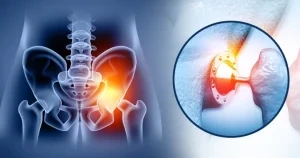
Early-Onset Hip Replacement: A Fresh Start
- The Shift in Thinking: In the past, surgeons told young patients to “wait until you’re 60” because implants didn’t last. Today, with Highly Cross-Linked Polyethylene and Ceramics, we expect modern implants to last 25–30 years or more.
- The Goal: Total pain elimination and an immediate return to an active lifestyle.
How Do We Choose? The Decision Matrix
Deciding between preservation and replacement is a collaborative process based on three primary factors:
|
Factor |
Joint Preservation |
Joint Replacement |
|
Cartilage State |
Mostly healthy/intact. |
Significant wear or “bone-on-bone.” |
|
Pain Type |
Sharp, mechanical, or activity-based. |
Constant, deep ache that affects sleep. |
|
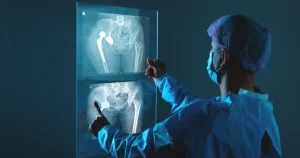
X-Ray Findings |
Structural issues (FAI/Dysplasia). |
Advanced joint space narrowing. |
|
Recovery Goal |
Delay arthritis and save native bone. |
Immediate, permanent pain relief. |
The 'Too Young' Myth: The Risk of Waiting
When you live in chronic pain for a decade while “waiting to be old enough,” you often develop secondary problems:
- Muscle Atrophy: The muscles around the hip weaken from disuse.
- Compensatory Pain: Your back, opposite hip, and knees begin to hurt as they overcompensate for your “bad” hip.
- Loss of Quality of Life: You miss out on the most active years of your life.
Summary: Personalized Joint Care
At the International Joint Center, we utilize a “patient-first” philosophy. If your natural joint can be saved, we use every tool in our arsenal to preserve it. If the joint is too far gone, we utilize muscle-sparing, high-tech replacements to get you back to the activities you love without the wait.
Expert Tip: If you have groin pain that hasn’t improved with physical therapy, don’t wait. An early MRI or specialized X-ray can determine if you are a candidate for preservation. Catching a structural issue early is the only way to “save” the joint.